Hotel Interior Designers in Surat: How Great Design Creates Better Guest Experiences
A hotel is more than a building with rooms. From the moment a guest enters the lobby to the time they check out, every space contributes to their experience. The reception area creates the first impression. The restaurant influences how long guests want to stay. The rooms determine comfort. Lighting affects mood. Even the corridors and waiting areas communicate something about the brand.
That is why hotel interior design is not simply about selecting attractive furniture or expensive finishes.
For hotel owners and developers, good hospitality design is a business decision.
As Surat continues to develop as a major business, commercial and lifestyle destination, the demand for well-designed hospitality spaces is likely to increase. Premium hotels and hospitality venues are competing not only on location and service but also on the quality of the guest experience.

For businesses planning a new hotel, boutique property, hospitality venue or hotel renovation, working with an experienced hotel interior designer can help create a space that is functional, memorable and commercially relevant.
Why Hotel Interior Design Matters
Guests may not remember the exact colour of the walls.
But they remember how the hotel made them feel.
They remember:
* The feeling of walking into the lobby
* Whether their room felt comfortable
* Whether the lighting was relaxing
* Whether the restaurant felt inviting
* Whether the spaces were easy to navigate
* Whether the interiors reflected the quality promised by the brand
This is the difference between decorating a hotel and designing a hospitality experience.
A successful hotel interior must balance several priorities at the same time.
Guest comfort
A visually impressive room that is uncomfortable will not create a positive guest experience.
Designers need to consider:
* Furniture ergonomics
* Bed placement
* Lighting
* Storage
* Privacy
* Acoustic comfort
* Bathroom functionality
* Movement within the room
Every decision should support how guests actually use the space.
Brand identity
A boutique hotel, luxury business hotel and resort should not look the same.
The interior should communicate the property’s personality.
For example, a business hotel may require a sophisticated and efficient atmosphere, while a boutique hotel may focus more heavily on storytelling and distinctive visual details.
The design should answer an important question:
What should guests remember about this property?
Operational efficiency
Hotel interiors must also work for the people operating the property.
This includes:
* Housekeeping
* Maintenance
* Reception staff
* Food and beverage teams
* Guests
* Management
Good design considers operational flow from the beginning.
What Should a Hotel Interior Designer Consider?
1. The Arrival Experience
The entrance and lobby are among the most important spaces in a hotel.
This is where guests form their first impression.
A well-designed lobby should feel welcoming while supporting practical requirements such as:
* Reception
* Waiting
* Luggage movement
* Seating
* Check-in
* Guest circulation
Lighting, furniture, materials and spatial planning should work together to create an immediate sense of place.
For luxury properties, the goal is not necessarily to make everything extravagant.
Often, thoughtful proportions, high-quality materials and carefully designed lighting create a stronger impression than excessive decoration.
2. Guest Room Design
The hotel room is where design meets everyday experience.
Guests expect the room to be attractive, but they also expect it to work effortlessly.
Important considerations include:
* Comfortable bed placement
* Functional bedside lighting
* Convenient charging points
* Storage
* Workspace requirements
* Bathroom design
* Lighting layers
* Material durability
A hotel interior designer must consider both aesthetics and the repeated use of the space.
Unlike a private residence, a hotel room needs to withstand continuous guest turnover.
Materials must therefore be selected for durability, maintenance and long-term performance.


3. Lighting Design
Lighting can completely change how a hotel feels.
Poor lighting can make an otherwise beautiful interior appear flat or uncomfortable.
A hospitality lighting strategy should consider different moments of the day and different activities.
For example:
* Brighter lighting may be required at reception.
* Softer lighting may create a relaxing restaurant environment.
* Guest rooms require functional task lighting as well as ambient lighting.
* Corridors need to feel safe without appearing overly institutional.
The most successful hotel interiors use layered lighting rather than relying on a single source of illumination.
4. Restaurants and Food & Beverage Spaces
For many hotels, restaurants are important commercial assets.
The design of these spaces can influence:
* Guest experience
* Dining time
* Brand perception
* Photography and social sharing
* Repeat visits
Restaurant interiors should reflect the food concept, target customer and desired atmosphere.
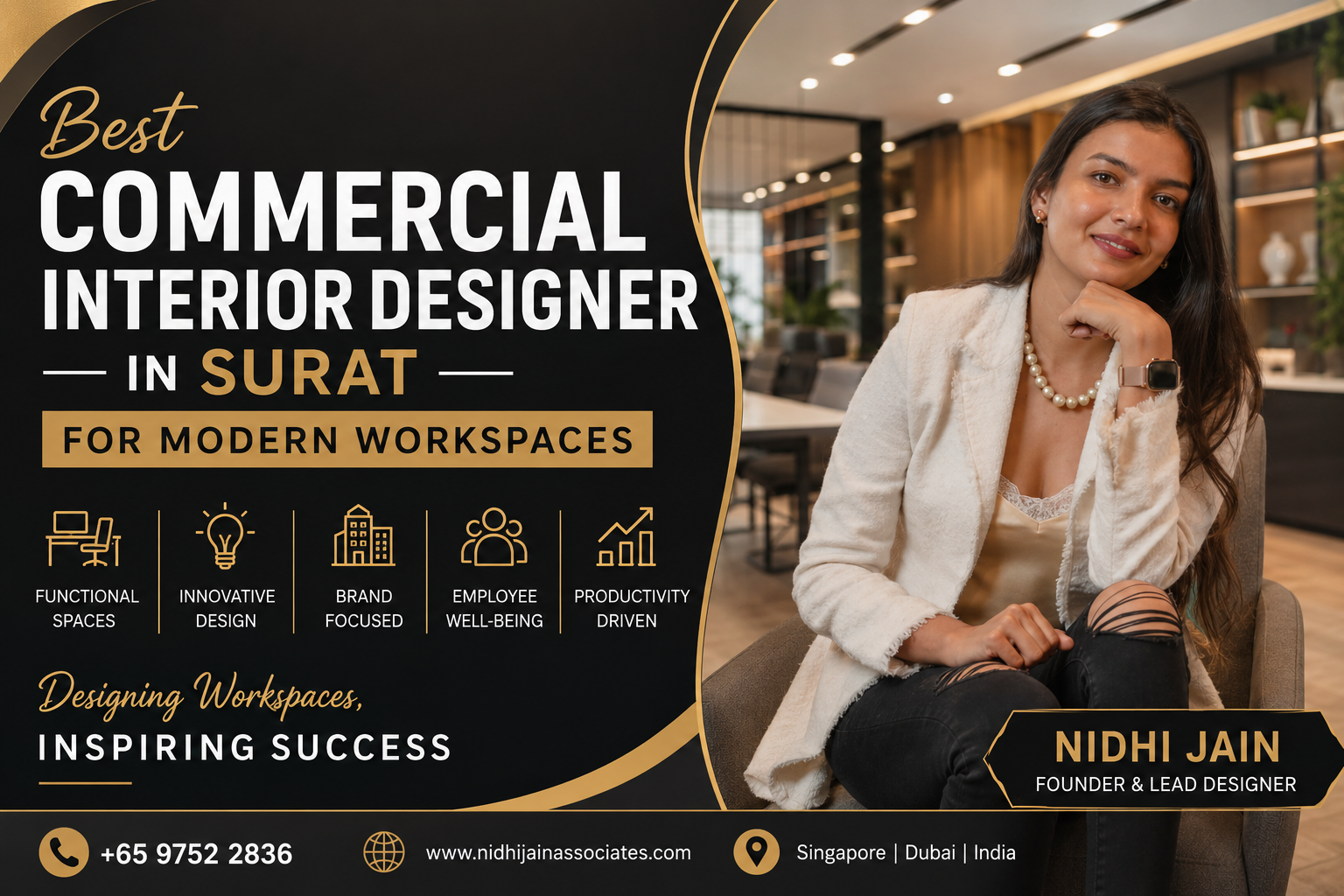
At Nidhi Jain Associates, commercial and hospitality design focuses on creating spaces where design supports the experience rather than becoming decoration for its own sake.
This is particularly important for hotel restaurants, where the space must work for hotel guests as well as external diners.
5. Creating a Sense of Place
The best hotels often have a strong sense of identity.
That identity may come from:
* Local materials
* Art
* Craftsmanship
* Architectural details
* Colour palettes
* Cultural references
However, hospitality design should avoid becoming overly literal.
The objective is not to fill a space with decorative references to a city.
Instead, the design can take inspiration from the location and reinterpret it in a contemporary way.
For a hotel in Surat, this might involve considering local craftsmanship, materials and the character of the city while creating an interior appropriate for a modern hospitality audience.
Boutique Hotels Need a Different Design Approach
Boutique hotels have an opportunity that large chain hotels sometimes do not.
They can have personality.
A boutique property can create a distinctive story through:
* Custom furniture
* Art
* Unique lighting
* Strong material choices
* Curated colour palettes
* Memorable public spaces
However, uniqueness should never compromise functionality.
The goal is to create a hotel that guests remember while ensuring that every space works efficiently.
Hotel Renovation: When Should You Redesign?
Many hotel owners assume that a complete renovation is necessary to transform a property.
That is not always the case.
Sometimes strategic interior changes can significantly improve perception.
This may include:
* Redesigning the lobby
* Upgrading lighting
* Renovating guest rooms
* Improving restaurant interiors
* Updating furniture
* Refreshing materials
* Improving wayfinding
* Creating stronger visual consistency
Before starting a renovation, it is useful to understand which areas are having the greatest impact on guest perception.
Choosing a Hotel Interior Designer in Surat
Before selecting a design firm, hotel owners should consider more than a portfolio of attractive photographs.
Ask:
Does the designer understand hospitality?
Hotel interiors have different requirements from residential interiors.
The designer should understand guest experience, operations, durability and circulation.
Can they understand our brand?
The hotel should not simply reflect the designer’s preferred style.
It should reflect the property’s identity and business objectives.
Do they understand commercial functionality?
A hotel is a business environment.
The design needs to support operations as well as aesthetics.
Can they manage complex spaces?
Hotels involve multiple environments, including:
* Lobby
* Reception
* Guest rooms
* Restaurants
* Lounges
* Meeting spaces
* Bathrooms
* Corridors
Each requires different design considerations.
Commercial Interior Design for Hospitality Businesses
At Nidhi Jain Associates, we believe that successful hospitality interiors should create experiences.
The goal is not simply to design a beautiful hotel.
The goal is to understand how guests move through the space, how they interact with it and how the environment supports the hotel’s brand.
With experience across luxury residential and commercial interiors, including hospitality and food and beverage environments, our approach combines:
* Space planning
* Interior architecture
* Lighting
* Materials
* Furniture
* Brand experience
* Functionality
Every hospitality project should have its own identity.
Planning a Hotel Interior Design Project in Surat?
Whether you are developing a new hotel, planning a boutique property or considering a renovation, the interior design process should begin with a clear understanding of your business, guests and operational requirements.
A successful hotel interior is not created by choosing furniture at the end of a project.
It begins with strategic planning.
Nidhi Jain Associates provides commercial interior design and hospitality design services for businesses looking to create distinctive, functional and memorable spaces.
If you are planning a hotel or hospitality project in Surat, contact Nidhi Jain Associates to discuss your project requirements.

Frequently Asked Questions
How much does hotel interior design cost in Surat?
The cost depends on the size of the hotel, number of rooms, level of luxury, scope of renovation, materials, furniture and the extent of custom design. A professional consultation can help define the scope before establishing a project budget.
What does a hotel interior designer do?
A hotel interior designer helps plan and design spaces such as lobbies, guest rooms, restaurants, lounges and other hospitality areas. The work may include space planning, materials, lighting, furniture and design coordination.
Can an interior designer help renovate an existing hotel?
Yes. An interior designer can assess the existing property and recommend strategic upgrades or a comprehensive redesign depending on the project’s requirements.
Why is hospitality interior design important?
Hospitality design influences guest comfort, brand perception and the overall experience of staying or dining at a property. Good design also considers operational efficiency and long-term maintenance.
Does Nidhi Jain Associates provide commercial interior design in Surat?
Nidhi Jain Associates provides interior design services across commercial and hospitality spaces. Contact the studio to discuss the requirements and scope of your project.