Beyond the Cubicle: How Active Biophilia and Sensory Zoning are Redefining Singapore’s Luxury Workspaces
For decades, the “prestige” of a Singaporean corporate office was measured by the height of its skyscraper and the cold, unyielding shine of its glass-and-steel partitions. But as we navigate 2026, a quiet revolution is taking place within the Central Business District (CBD). High-net-worth business owners and boutique firm partners are realizing that true luxury isn’t found in sterile perfection; it’s found in Vitality.
At Nidhi Jain Associates, we are seeing a definitive shift in commercial interior design. The cubicle is no longer just “open”—it has been replaced by living, breathing ecosystems. Two concepts are leading this charge: Active Biophilia and Sensory Zoning.
1. Active Biophilia: More Than Just a Potted Plant
In the past, “biophilic design” in a Singapore office often meant a few scattered monsteras or a static moss wall in the reception area. In 2026, we have moved into the era of Active Biophilia.
Active biophilia refers to natural systems that are integrated into the office’s infrastructure to improve the environment.
* Air-Purifying Living Partitions: Instead of drywall, we are designing modular room dividers that house hydroponic systems. These “living walls” don’t just look beautiful; they actively scrub the air of VOCs and carbon dioxide, replacing them with fresh oxygen that keeps teams sharp during the “afternoon slump.”
* Hygroscopic Materiality: Singapore’s humidity is a constant challenge for indoor comfort. By using lime-based plasters and clay finishes—materials that naturally absorb and release moisture—we create a “breathable” office.
This reduces the heavy reliance on aggressive HVAC systems, creating a more natural, temperate microclimate.
* Circadian Lighting Integration: We utilize smart lighting that mimics the natural movement of the sun. In a luxury workspace, this means lighting that is crisp and blue-toned in the morning to spark productivity, transitioning to a warm, amber glow by 4:00 PM to support the body’s natural cortisol drop.

2. Sensory Zoning: Designing for “Neuro-Equity”
One of the biggest failures of the traditional open-plan office was the “one-size-fits-all” approach to noise and light. Sensory Zoning is the sophisticated architectural solution to this problem. Instead of walls, we use Acoustic Intelligence and Material Shifts to define different “energy zones.”
The High-Stimulus “Buzz” Zone
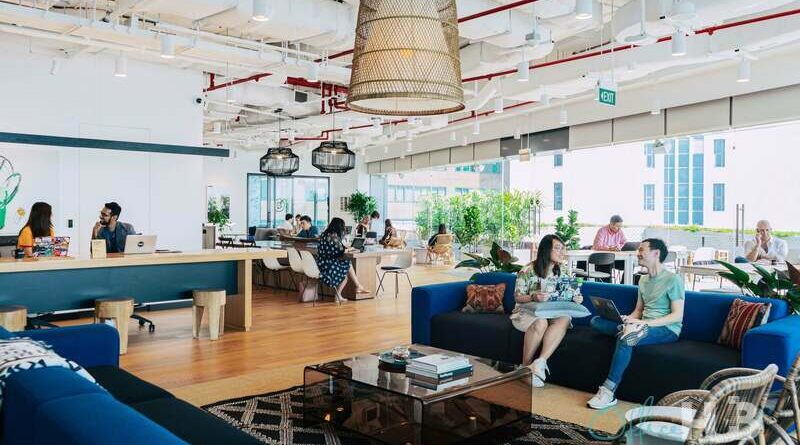
This is the “town square” of the office—the collaborative hub. Here, we use vibrant colors, higher ceilings, and “lively” acoustics that allow for the hum of conversation. It’s designed for brainstorming, where the energy of the room feeds the creativity of the team.
The Low-Stimulus “Library” Zone
For deep work, we design strictly quiet zones. These areas feature heavy acoustic dampening—think plush, recycled-wool wall panels and “invisible” glass barriers. The lighting is dimmed and personalized, allowing an executive or analyst to enter a state of “flow” without the visual or auditory interruptions of a busy office.
The “Reset” Room
The ultimate luxury in a 2026 Singapore office is a tech-free sanctuary. We are increasingly designing small “Cocoon” pods or “Meditation Nooks” that are entirely analog. These spaces use soft, tactile textures like rattan and organic cotton, providing a sensory “reset” for employees to decompress between high-stakes meetings.
3. Why This Matters for the Luxury Commercial Segment
In a competitive market like Singapore, your physical office is a physical manifestation of your brand’s values. When a client walks into a space designed by Nidhi Jain Associates, they aren’t just seeing a “nice office”—they are feeling a sense of Trust and Longevity.
* Employee Retention: Top-tier talent in 2026 chooses where to work based on wellness. An office that actively supports their health through biophilia is a powerful recruitment tool.
* Productivity ROI: Research shows that biophilic environments can increase productivity by up to 15%. In a luxury commercial setting, that 15% translates into significant business growth.
* Brand Authority: For firms in legal, finance, or functional medicine, a “wellness-centric” office signals that you are forward-thinking and care about the human element of your business.
4. Implementation: Small Shifts for Big Impact
You don’t need a total overhaul to begin incorporating these trends. For many of our clients at Nidhi Jain Associates, we begin with Interior Styling and “Phased Biophilia.”
1. Audit Your Acoustics: Identify the “pain points” where noise is killing productivity and introduce acoustic art or fluted timber panels.
2. Swap Your Synthetics: Replace cold, synthetic furniture with “Quiet Luxury” materials like FSC-certified timber and natural textiles.
3. Introduce Functional Greenery: Move away from decorative pots and toward integrated planter boxes that serve as space-makers.

Conclusion: The Office as a Sanctuary
The “Cubicle” represented a time when work was seen as a mechanical process. Today, work is a creative, human endeavor. By embracing Active Biophilia and Sensory Zoning, we are transforming Singapore’s luxury workspaces into sanctuaries of vitality and focus.
At Nidhi Jain Associates, we specialize in “Function Over Ornament.” We believe that a workspace should age as beautifully as the businesses within them. Whether you are designing a boutique office in the CBD or a luxury commercial showroom, let us help you create a space that breathes.