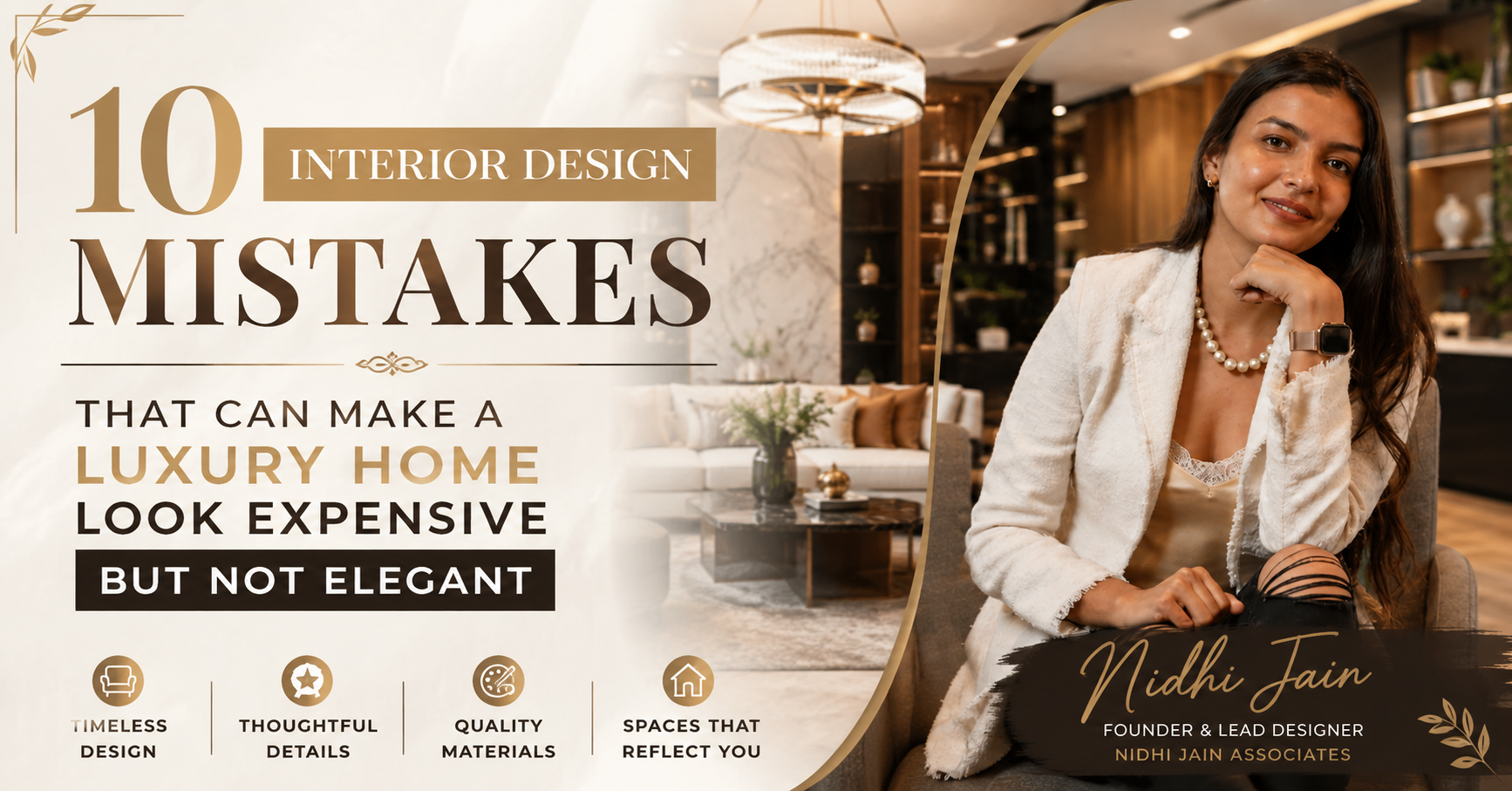
10 Interior Design Mistakes That Can Make a Luxury Home Look Expensive but Not Elegant
Luxury interior design is not simply about spending more money. A home can feature expensive marble, designer furniture, statement lighting, and premium finishes yet still feel overwhelming rather than elegant.
True luxury is often found in balance, proportion, quality, functionality, and attention to detail. The most sophisticated homes do not necessarily display everything they can afford. Instead, they use carefully selected materials, furniture, colours, and architectural elements to create a space that feels refined and timeless.
If you are designing or renovating a premium home, here are 10 common interior design mistakes that can make a luxury home look expensive—but not elegant.
1. Using Too Many Expensive Materials in One Space
One of the biggest mistakes in luxury interior design is assuming that more expensive materials automatically create a more luxurious appearance.
For example, combining multiple types of marble, heavily patterned wallpaper, metallic finishes, decorative panels, and bold furniture in one room can make the space feel visually crowded.
The Better Approach
Choose a limited palette of premium materials that work well together.
For example:
- One dominant natural stone
- Warm wood finishes
- High-quality fabrics
- Carefully selected metal accents
Luxury often comes from the quality and harmony of materials, rather than the number of expensive finishes used.
2. Choosing Oversized Furniture for the Space
Large furniture may look impressive in a showroom, but it can make a home feel uncomfortable if it is not proportionate to the room.
Oversized sofas, massive dining tables, or large decorative pieces can:
- Reduce movement space
- Make rooms feel crowded
- Block natural light
- Disrupt the overall balance
The Better Approach
Furniture should be selected according to the dimensions and layout of the room.
A well-designed luxury interior creates a sense of comfort and openness. Before purchasing furniture, consider circulation space, ceiling height, room proportions, and how people will use the area.
3. Following Every Interior Design Trend
Trends can provide inspiration, but designing an entire home around temporary trends can make it feel outdated quickly.
A luxury home should ideally have a strong foundation that remains attractive for years.
The Better Approach
Focus on timeless elements for major investments such as:
- Flooring
- Kitchen design
- Built-in furniture
- Natural stone
- Architectural details
Trends can then be introduced through items that are easier to update, such as cushions, artwork, accessories, or decorative objects.
4. Overusing Statement Lighting
A beautiful chandelier can become the centrepiece of a room. However, placing a statement light in every area can create unnecessary visual competition.
Multiple oversized chandeliers and decorative fixtures may make a home feel more like a showroom than a sophisticated living space.
The Better Approach
Create a balanced lighting plan that includes:
- Ambient lighting
- Task lighting
- Accent lighting
- Decorative lighting
Not every room needs a dramatic chandelier. Sometimes subtle lighting creates a more elegant atmosphere.
5. Ignoring Colour Balance
Luxury interiors do not have to be completely neutral, but using too many bold colours can make a premium space feel disconnected.
Similarly, using only one colour without variation can make the home feel flat.
The Better Approach
Develop a carefully planned colour palette.
Consider:
- A dominant base colour
- Complementary secondary tones
- Natural material colours
- A limited number of accent shades
The goal is to create visual continuity between different rooms while allowing each space to have its own personality.
6. Filling Every Corner With Décor
An expensive home can lose its elegance when every surface is covered with decorative accessories.
Too many items can create visual clutter, even when every piece is individually beautiful.
Common examples include:
- Too many sculptures
- Excessive decorative cushions
- Multiple table accessories
- Overcrowded shelves
- Too much wall décor
The Better Approach
Allow the design to breathe.
Empty space is an important element of luxury design. Carefully selected artwork, accessories, and furniture can have more impact when they are not competing with dozens of other objects.
7. Choosing Furniture Without Considering Comfort
Luxury should feel comfortable as well as visually appealing.
Sometimes homeowners select furniture purely because it looks impressive, without considering whether it is practical for everyday living.
A beautiful sofa that nobody enjoys sitting on does not add real value to a home.
The Better Approach
Consider how each space will actually be used.
Ask:
- Is the seating comfortable?
- Is the furniture suitable for daily use?
- Is there enough storage?
- Can people move comfortably through the room?
- Does the layout support your lifestyle?
The best luxury interiors combine beauty with effortless functionality.
8. Mixing Too Many Design Styles
A carefully designed combination of styles can create character. However, mixing too many unrelated styles can make a home feel confused.
For example, combining:
- Classical furniture
- Ultra-modern lighting
- Industrial finishes
- Traditional artwork
- Glamorous decorative accessories
without a clear design concept may create visual inconsistency.
The Better Approach
Start with a clear design direction.
You may combine styles, but there should be a connecting element, such as:
- Colour palette
- Materials
- Furniture shapes
- Architectural details
- Overall mood
A cohesive interior feels intentional, while an unplanned mixture can feel chaotic.
9. Neglecting Architectural Details
Luxury interiors are not created only through furniture and accessories.
Architectural elements such as wall proportions, ceiling details, doors, flooring transitions, and lighting placement have a major impact on the overall appearance of a home.
Even expensive furniture can look out of place in a poorly planned room.
The Better Approach
Pay attention to the foundation of the interior, including:
- Ceiling design
- Wall panelling
- Door details
- Flooring patterns
- Window treatments
- Built-in storage
- Lighting placement
Good architecture and thoughtful detailing create a strong foundation for elegant interiors.
10. Designing for Appearance Instead of Lifestyle
Perhaps the biggest mistake is designing a home primarily to impress visitors.
A luxury home should reflect the people who live in it.
If the interior is visually impressive but uncomfortable, difficult to maintain, or unsuitable for everyday life, it may not provide a truly luxurious experience.
The Better Approach
Design around your lifestyle.
Consider:
- Your daily routine
- Family requirements
- Entertaining preferences
- Storage needs
- Work-from-home requirements
- Personal interests
- Maintenance expectations
The most elegant homes feel personal, comfortable, and effortless.
What Makes a Luxury Home Truly Elegant?
An elegant luxury home usually has several things in common:
Quality Over Quantity
A few carefully selected, high-quality pieces can have more impact than filling every room with expensive items.
Balance and Proportion
Furniture, lighting, colours, and architectural details should work together according to the size and proportions of the space.
Timeless Design
A strong foundation of timeless materials and thoughtful planning helps a home remain attractive for years.
Attention to Detail
Small details such as hardware, lighting placement, material transitions, and finishing quality can make a significant difference.
Personalisation
The most successful luxury homes reflect the lifestyle and personality of the people living in them.
How an Interior Designer Can Help Create an Elegant Luxury Home
Working with an experienced interior designer can help homeowners avoid costly mistakes during the planning and execution stages.
A professional designer can assist with:
- Space planning
- Material selection
- Furniture selection
- Lighting design
- Colour coordination
- Custom furniture
- Budget planning
- Design visualisation
- Project coordination
Rather than simply adding expensive materials, a thoughtful interior design approach focuses on creating a home where every element has a purpose.
Final Thoughts
Luxury and elegance are not the same thing.
A home can be filled with expensive materials, designer furniture, and decorative accessories but still lack harmony and refinement.
The most elegant interiors are created through thoughtful planning, balanced proportions, high-quality materials, functional layouts, and careful attention to detail.
By avoiding excessive decoration, poor space planning, oversized furniture, unnecessary trends, and mismatched styles, homeowners can create spaces that feel sophisticated rather than simply expensive.
Ultimately, true luxury is not about showing how much has been spent on a home. It is about creating an environment that feels timeless, comfortable, personal, and effortlessly elegant.
At Nidhi Jain Associates, we believe that true luxury lies in thoughtful design, timeless elegance, and exceptional attention to detail. Our approach to interior design focuses on creating sophisticated spaces that are not only visually stunning but also functional and personalised to each client’s lifestyle. From space planning and material selection to bespoke furniture and refined finishes, our team works to create interiors where every element feels balanced, purposeful, and effortlessly elegant.
Frequently Asked Questions
1. What makes a home look luxurious and elegant?
A luxurious and elegant home focuses on quality, proportion, thoughtful space planning, refined materials, balanced lighting, and a cohesive design concept.
2. Can too much expensive furniture make a home look less elegant?
Yes. Too many expensive furniture pieces or decorative elements can create visual clutter. Luxury interiors often benefit from a more carefully curated approach.
3. What colours work best for elegant luxury interiors?
There is no single colour palette for luxury interiors. Neutral tones, natural colours, and carefully selected accent colours can all work well when they are balanced with the materials and lighting in the space.
4. Should luxury interiors follow current trends?
Trends can be used for inspiration, but major design decisions should ideally focus on timeless materials and layouts. Smaller accessories can be updated more easily as trends change.
5. Why is space planning important in luxury interior design?
Effective space planning ensures that furniture, movement areas, lighting, storage, and functionality work together, making the home comfortable as well as visually appealing.
6. How can an interior designer help avoid costly mistakes?
An experienced interior designer can help with planning, material selection, furniture proportions, lighting, budgeting, and project coordination before costly mistakes occur during execution.