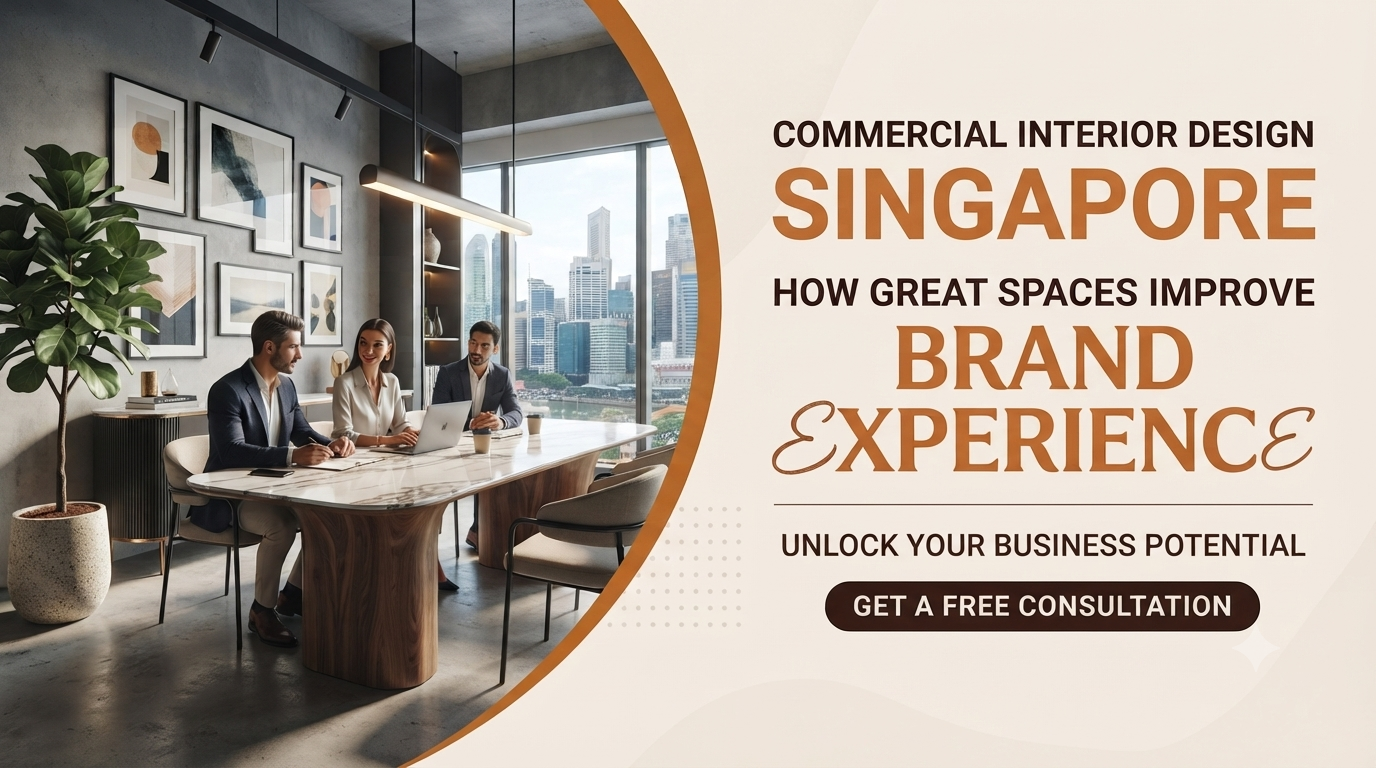
Commercial Interior Design in Singapore: How Great Spaces Improve Brand Experience
In Singapore’s competitive business environment, a commercial space is more than just a place where employees work or customers visit. It is an important part of a company’s brand identity, customer experience, and business strategy.
A thoughtfully designed commercial interior can communicate a brand’s personality before a customer speaks to a member of the team. From the reception area and meeting rooms to lighting, furniture, materials, and spatial planning, every element can influence how people perceive a business.
This is why commercial interior design in Singapore is increasingly focused on creating spaces that are not only attractive but also functional, memorable, and aligned with the brand.
What Is Commercial Interior Design?
Commercial interior design involves planning and designing spaces used for business and professional purposes. These can include:
- Corporate offices
- Retail stores
- Restaurants and cafés
- Hotels and hospitality spaces
- Showrooms
- Clinics and wellness centres
- Co-working spaces
- Corporate reception areas
- Business lounges
The objective is to create an environment that supports business operations while delivering a consistent experience for employees, customers, and visitors.
Why Commercial Interior Design Matters for Brand Experience
Your physical environment can become an extension of your brand.
For example, a premium brand may use sophisticated materials, carefully controlled lighting, elegant furniture, and refined detailing. A technology company may prefer an open, flexible environment with contemporary finishes and collaborative spaces.
The design should therefore answer an important question:
“Does this space feel like the brand?”
When the answer is yes, the physical environment can strengthen brand recognition and create a more cohesive customer experience.
1. First Impressions Start With the Space
Customers often form an initial impression within moments of entering a commercial property.
The reception, entrance, signage, lighting, furniture and overall layout can influence that first impression.
A well-designed entrance can communicate:
- Professionalism
- Quality
- Trust
- Creativity
- Luxury
- Innovation
For businesses where customer interaction is important, the reception and waiting area deserve particular attention.

2. Interior Design Can Communicate Brand Identity
Brand identity is not limited to a logo, colour palette or advertising campaign.
Interior design can translate those brand characteristics into a physical environment.
Elements such as:
- Colour
- Materials
- Furniture
- Lighting
- Textures
- Artwork
- Signage
- Architectural details
can work together to create a recognizable visual language.
For example, a premium hospitality brand may use natural stone, warm lighting and carefully selected furnishings to create a sophisticated atmosphere.
3. Functional Planning Improves the User Experience
Beautiful design is only one part of successful commercial interiors.
A space also needs to work efficiently.
Professional commercial interior design in Singapore considers factors such as:
- Customer movement
- Employee circulation
- Furniture placement
- Storage
- Privacy
- Meeting areas
- Lighting requirements
- Accessibility
- Operational requirements
Good space planning reduces unnecessary movement and helps people understand how to use the space naturally.
4. Lighting Can Influence Atmosphere
Lighting plays a significant role in commercial interiors.
Different spaces require different lighting strategies.
For example:
Reception areas: welcoming and visually attractive lighting
Workspaces: comfortable and functional illumination
Retail environments: lighting that highlights products
Restaurants: atmospheric lighting that supports the dining experience
Hotels: layered lighting that creates a comfortable and sophisticated environment
Combining ambient, task and accent lighting can help create depth and visual interest.

5. Materials and Finishes Shape Perception
Materials communicate quality and character.
Natural stone, timber, glass, metal, fabrics and other finishes can be combined to create different visual experiences.
The choice should consider both aesthetics and practical requirements such as:
- Durability
- Maintenance
- Safety
- Cleaning
- Long-term performance
- Budget
For a commercial project, the most visually attractive material is not always the most practical choice. Professional interior planning balances both.
6. A Strong Design Creates Memorable Experiences
A customer may forget a conversation or advertisement, but a distinctive physical environment can remain memorable.
Unique architectural details, artwork, furniture arrangements, lighting features or material combinations can create visual moments that differentiate a business.
This is particularly important for:
- Hotels
- Restaurants
- Retail stores
- Showrooms
- Luxury offices
- Experience centres
A memorable environment can become part of the overall brand experience.
7. Employee Experience Matters Too
Commercial interior design is not only about customers.
Employees spend significant amounts of time within the workplace, making workplace design an important part of the overall business environment.
A well-planned office can provide a balance between:
- Collaboration
- Concentration
- Meetings
- Informal interaction
- Privacy
- Relaxation
Ergonomic furniture, appropriate lighting, acoustic planning and flexible spaces can contribute to a more comfortable workplace.
8. Technology Is Becoming Part of Commercial Interiors
Modern commercial spaces increasingly need to accommodate technology.
Depending on the project, this can include:
- Smart lighting
- Integrated audiovisual systems
- Digital displays
- Video conferencing
- Automated controls
- Charging points
- Smart access systems
Technology should ideally be integrated into the design rather than appearing as an afterthought.
9. Sustainability Is Becoming More Important
Businesses are increasingly considering sustainability when developing commercial spaces.
Interior strategies can include:
- Energy-efficient lighting
- Durable materials
- Responsible material selection
- Natural lighting
- Efficient space planning
- Reusable or adaptable furniture
- Indoor plants and biophilic elements
Sustainable design can also support a brand’s wider environmental and corporate responsibility objectives.
10. Why Businesses Should Work With a Professional Interior Designer
Commercial projects involve more than selecting furniture and colours.
An experienced interior design team can help coordinate:
- Concept development
- Space planning
- Material selection
- Furniture
- Lighting
- Branding integration
- Drawings
- Vendor coordination
- Project execution
- Final styling
This integrated approach can help ensure that the finished space reflects the intended brand experience.
How to Choose a Commercial Interior Designer in Singapore
Before selecting an interior design studio, businesses should consider several factors.
Review Their Portfolio
Look for projects that demonstrate experience with spaces similar to yours.
Understand Their Design Approach
Ask how the designer balances aesthetics, functionality, brand identity and budget.
Discuss Your Business Objectives
The designer should understand what your space needs to achieve, rather than simply focusing on visual appearance.
Ask About Project Management
Clarify how design development, vendors, timelines and execution will be managed.
Consider Industry Experience
Experience in hospitality, corporate, retail or other commercial sectors can be useful because each type of project has different requirements.
The Role of Nidhi Jain Associates
For businesses looking to create distinctive and functional commercial environments, Nidhi Jain Associates focuses on developing interiors that combine design, functionality, aesthetics and brand experience.
A successful commercial interior should not simply look impressive. It should support the way people interact with the business and create a coherent experience from the moment they enter the space.
Final Thoughts
Great commercial interior design can transform a business environment into an important part of the brand experience.
From the entrance and reception to lighting, furniture, materials and spatial planning, every detail contributes to how customers and employees experience a business.
For companies investing in commercial interior design in Singapore, the goal should therefore go beyond creating a beautiful space. The objective should be to create an environment that is functional, memorable, aligned with the brand and designed for the people who use it.
A well-designed commercial space can become one of the most tangible expressions of a brand.
Frequently Asked Questions
1. What is commercial interior design in Singapore?
Commercial interior design involves designing business spaces such as offices, retail stores, restaurants, hotels, showrooms and other professional environments with a focus on functionality, aesthetics and user experience.
2. How does commercial interior design improve brand experience?
Interior design can translate a company’s brand identity into its physical environment through colours, materials, lighting, furniture, layout and architectural details.
3. What types of commercial spaces can an interior designer design?
Commercial interior designers can work on offices, retail stores, restaurants, hotels, showrooms, clinics, co-working spaces and other business environments.
4. How important is space planning for commercial interiors?
Space planning is essential because it helps organise movement, work areas, customer areas, meeting spaces, storage and other functions efficiently.
5. How do I choose a commercial interior designer in Singapore?
Review their portfolio, experience, design approach, project-management process and ability to understand your business and brand requirements.
6. Is commercial interior design only about aesthetics?
No. Commercial interior design combines aesthetics with functionality, space planning, user experience, durability, lighting, materials, technology and operational requirements.
7. Can interior design help strengthen a company’s brand identity?
Yes. A carefully designed environment can visually communicate aspects of a brand’s personality and create a consistent physical experience for customers and employees.
8. How long does a commercial interior design project take?
The timeline depends on the size, complexity, approvals, design requirements, procurement and execution process. A professional designer can provide a project-specific timeline after understanding the scope.