Office Interior Design Singapore: How to Design Productive Modern Workspaces
A modern office is no longer just a place where employees sit at desks and complete their daily tasks. Today, office spaces are designed to support productivity, collaboration, employee wellbeing, creativity and brand identity.
In Singapore, where commercial space can be valuable and businesses operate in a highly competitive environment, thoughtful office interior design can make a significant difference.
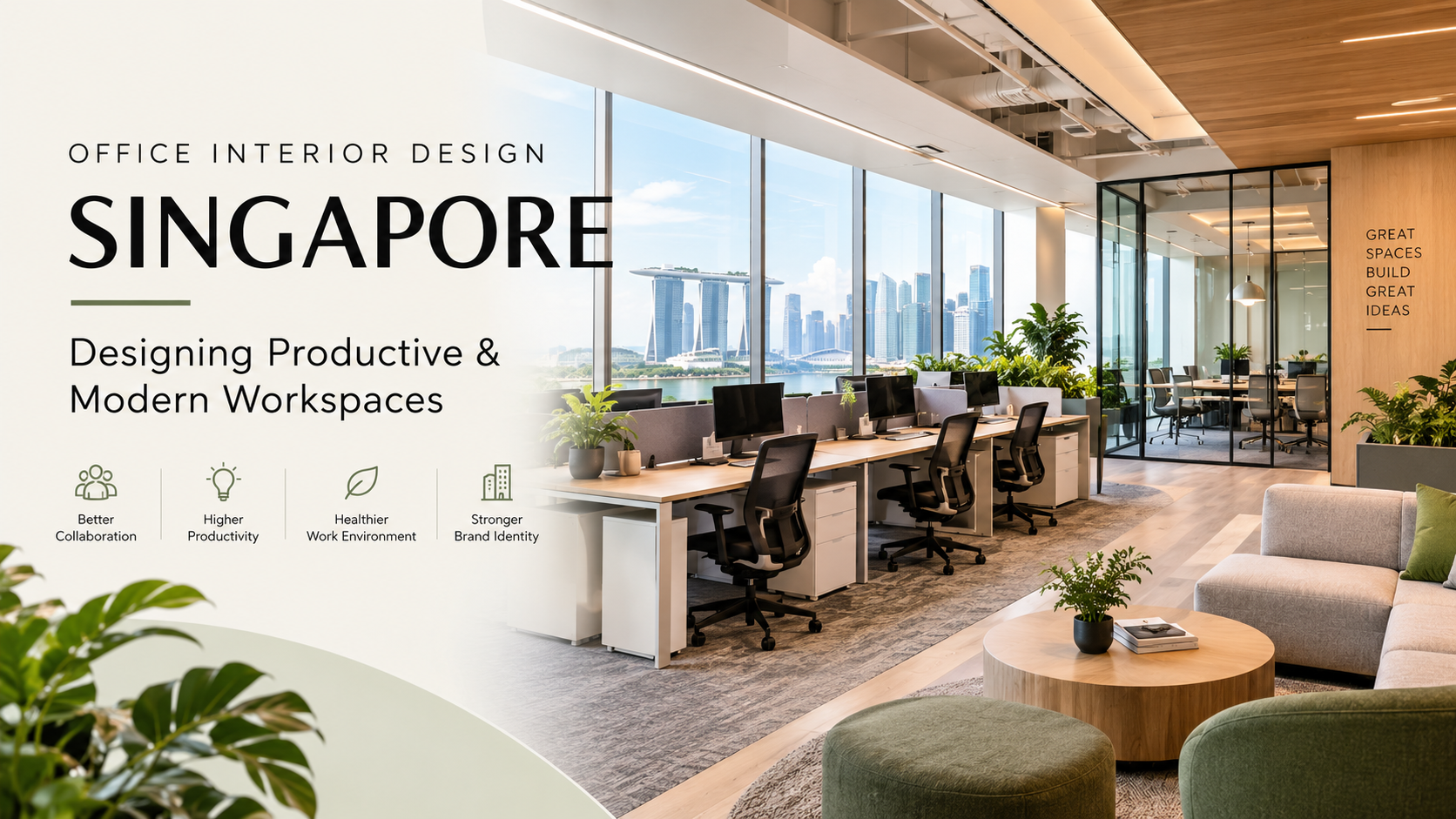
From flexible workstations and collaborative zones to natural lighting, acoustic solutions and biophilic elements, modern office design focuses on creating workplaces that work for both businesses and employees.
Why Is Office Interior Design Important in Singapore?
Singapore businesses need to make the most of their available office space. A well-planned interior can help organisations create a professional environment without wasting valuable floor area.
Good office interior design can help:
- Improve workplace functionality
- Encourage collaboration
- Create better employee experiences
- Support different working styles
- Strengthen company branding
- Improve space utilisation
- Create a professional impression for clients
- Support employee wellbeing
The objective is not simply to create a beautiful office. The objective is to create a workplace that supports the way a business actually operates.
1. Start With Smart Space Planning
Space planning should be one of the first steps in an office interior project.
Before selecting furniture or colours, designers should understand:
- Number of employees
- Departments and teams
- Meeting requirements
- Private work requirements
- Storage needs
- Reception requirements
- Collaboration areas
- Future expansion plans
A good layout should provide an efficient flow between different areas while avoiding unnecessary congestion.
Common Office Zones
A modern Singapore office may include:
Reception Area: Creates the first impression for visitors.
Workstations: Provides employees with comfortable everyday work areas.
Meeting Rooms: Supports private meetings, presentations and discussions.
Collaboration Areas: Encourages informal communication and teamwork.
Focus Rooms: Provides quiet areas for concentrated work.
Breakout Areas: Gives employees spaces to relax or work informally.
2. Design Flexible Workspaces
The modern workplace needs flexibility.
Employees may work individually one day and collaborate with colleagues the next. Therefore, offices increasingly require spaces that can serve multiple purposes.
Flexible office design can include:
- Movable furniture
- Modular partitions
- Flexible meeting areas
- Shared workstations
- Hot-desking zones
- Informal seating
- Multi-purpose rooms
This approach allows businesses to adapt their workplace as teams and working patterns change.
3. Bring Natural Light Into the Office
Lighting has a major impact on the atmosphere of a workplace.
Where possible, office layouts should make effective use of available natural light. Glass partitions, open layouts and appropriate furniture placement can help distribute daylight throughout the office.
For areas that require artificial lighting, designers can use different lighting levels depending on the function of the space.
For example:
- Brighter task lighting for work areas
- Softer lighting for breakout spaces
- Feature lighting in reception areas
- Appropriate lighting for meeting rooms
The result is a workplace that feels more comfortable and visually balanced.
4. Use Biophilic Office Design
Bringing natural elements into workplaces has become an important direction in modern office design.
Biophilic office interiors can incorporate:
- Indoor plants
- Natural timber
- Stone textures
- Natural fabrics
- Green walls
- Organic forms
- Views of outdoor greenery
In a dense urban environment such as Singapore, these elements can help create a more welcoming workplace atmosphere.
5. Prioritise Acoustics
Open-plan offices can encourage communication, but excessive noise can make concentration difficult.
Acoustic planning should therefore be considered during the design stage.
Possible solutions include:
- Acoustic wall panels
- Carpet flooring
- Acoustic ceilings
- Sound-absorbing furniture
- Enclosed meeting rooms
- Phone booths
- Quiet work areas
A successful office does not necessarily need to be completely silent. Instead, it should provide different acoustic environments for different activities.
6. Create Comfortable Workstations
Employees spend a significant amount of time at their workstations, making ergonomics an important consideration.
Office furniture should support comfortable working positions and allow employees to work efficiently.
Consider:
- Ergonomic chairs
- Appropriate desk heights
- Monitor positioning
- Sufficient desk space
- Cable management
- Adequate storage
- Comfortable lighting
A well-designed workstation combines functionality with employee comfort.
7. Use Your Office to Strengthen Your Brand
An office can become a physical representation of a company’s identity.
Brand colours, materials, graphics, artwork and furniture can be incorporated into the interior without making the space feel overly promotional.
For example, a technology company might prefer a contemporary and flexible environment, while a professional services company may choose a more sophisticated and understated aesthetic.
The key is to create a workplace that feels authentic to the organisation.
8. Design Better Meeting Spaces
Not every meeting requires the same environment.
Instead of having only traditional boardrooms, modern offices can include different types of meeting spaces.
Formal Meeting Rooms
Suitable for:
- Client meetings
- Presentations
- Management discussions
Small Meeting Rooms
Ideal for:
- Team discussions
- Interviews
- Video calls
Informal Meeting Areas
Useful for:
- Brainstorming
- Quick discussions
- Collaborative work
Providing multiple meeting formats can make an office more adaptable.
9. Add Employee Wellness Areas
Employee wellbeing is becoming increasingly important in workplace design.
Depending on the available space, offices can include:
- Relaxation areas
- Pantry spaces
- Comfortable breakout zones
- Quiet rooms
- Informal seating
- Wellness spaces
Even a small dedicated area can provide employees with an opportunity to step away from their workstation and recharge.
10. Choose Materials Carefully
Materials influence both the appearance and functionality of an office.
When selecting materials, consider:
- Durability
- Maintenance
- Acoustic performance
- Sustainability
- Appearance
- Cost
- Long-term usability
Instead of selecting materials purely because they are fashionable, businesses should consider how they will perform over several years.
11. Incorporate Smart Office Technology
Technology should be integrated into the design rather than added as an afterthought.
Modern offices may incorporate:
- Video conferencing systems
- Smart lighting
- Occupancy sensors
- Wireless charging
- Digital room-booking systems
- Integrated AV systems
- Smart access systems
Technology can help employees use office spaces more efficiently while supporting flexible working patterns.
12. Choose a Professional Office Interior Designer
Designing an office requires more than choosing attractive furniture and colours.
A professional office interior designer in Singapore can help businesses with:
- Space planning
- Concept development
- Material selection
- Furniture planning
- Lighting design
- Branding integration
- Functional zoning
- Project coordination
An experienced designer can also help balance aesthetics, functionality and the practical requirements of the business.
Popular Office Interior Design Styles in Singapore
Modern Minimalist
Clean lines, neutral colours, simple furniture and uncluttered spaces.
Contemporary
A combination of modern materials, innovative furniture and sophisticated finishes.
Industrial
Exposed materials, metal elements, concrete finishes and open layouts.
Biophilic
Natural materials, greenery, natural light and organic textures.
Luxury Corporate
Premium materials, refined furniture, sophisticated lighting and elegant finishes.
The right style should depend on the company’s identity, employees, clients and business objectives.
Office Interior Design Trends to Watch in Singapore
Several workplace design directions are becoming increasingly relevant:
Flexible Workspaces
Offices are being designed to accommodate different working styles rather than assigning every employee a fixed environment.
Activity-Based Working
Different spaces are created for different activities, including concentration, collaboration, meetings and informal work.
Wellness-Focused Design
Employee comfort and wellbeing are becoming important considerations in workplace planning.
Sustainable Materials
Businesses are increasingly considering materials and design approaches that have a lower environmental impact.
Technology-Integrated Offices
Smart systems and digital tools are becoming more closely integrated into workplace environments.
Residential-Inspired Workspaces
Comfortable furniture, warm materials and relaxed environments can make workplaces feel less institutional and more welcoming.
How Much Does Office Interior Design Cost in Singapore?
The cost of an office interior project can vary significantly depending on factors such as:
- Office size
- Design complexity
- Materials
- Furniture
- M&E requirements
- Renovation scope
- Customisation
- Technology integration
- Project timeline
Instead of focusing only on the lowest initial cost, businesses should consider the long-term value and functionality of the workplace.
Final Thoughts
A productive office is not created simply by placing more desks into a room.
Effective office interior design in Singapore combines space planning, ergonomics, lighting, acoustics, technology, branding and employee wellbeing to create a workplace that supports both people and business goals.
Whether you are setting up a new office, renovating an existing workspace or planning an office relocation, a thoughtful interior design strategy can transform the way your organisation works.
The best modern office is not just designed to look good — it is designed to help people work better.
Frequently Asked Questions
What is office interior design?
Office interior design involves planning and designing a workplace to improve its functionality, appearance, comfort and overall user experience.
Why is office interior design important in Singapore?
Because commercial space can be valuable, effective planning helps businesses maximise available space while creating a productive and professional workplace.
What are the latest office design trends in Singapore?
Flexible workspaces, biophilic design, wellness-focused environments, activity-based working, technology integration and comfortable informal areas are important directions in modern workplace design.
How can office design improve productivity?
Good space planning, appropriate lighting, comfortable furniture, effective acoustics and dedicated areas for different activities can help create a workplace better suited to productive work.
How do I choose an office interior designer in Singapore?
Review the designer’s portfolio, experience with commercial projects, understanding of your business requirements, design process, project scope and ability to work within your budget.